
Homes for the South West is a group of chief executives from some of the largest housing associations in South West England.
We are working together to identify and tackle the barriers to new housing in our region. Our collective voice is making the case for new housing at a local, regional and national level.
We are ambitious about the role we can play together to invest in and build more homes in the South West.

Long-term sustainable funding is essential for us to make the necessary investment decisions to continue to build, particularly through periods of market uncertainty. It allows the sector to remain agile and make long-term decisions, providing stability in the supply pipeline. The National Housing Federation have stated that £12.8bn will support the levels of investment required to address the housing crisis. Alternatively, an increase of grant to £50,000 per unit will enable a switch from affordable to social rent tenure, saving £4.5m/year in benefit. We also need support to ensure the sector’s continued ability to borrow and invest in new supply.
Our asks are:
A long-term commitment to public investment from government, offering certainty.
Make grant funding accessible and flexible for all housing associations.
Increase funding levels to match supply and affordability needs.
Offer housing associations certainty about future rent levels.
Long-term financial commitments to ensure the viability of new homes for the vulnerable and homeless needing support.
Land is vital to the delivery of housing; however, the current model is geared towards those that can acquire land as the highest bidder, which favours large developers able to ‘land bank’. We also need to increase the supply of land, which especially in the South West, is a major constraint on development. This could be done through selective release of land from the greenbelt or extending land supply targets.
Our asks are:
Government should incentivise local authorities to offer public land to developers of affordable housing.
Government should prioritise the sale of public sector land for affordable housing.
Local authorities should extend land supply targets.
Undertake a review of the definition, purpose, and objective of greenbelt land.
The planning system is a serious barrier to quickly delivering affordable housing. With simple changes, the government could effectively increase the supply of affordable homes, while providing greater transparency and clarity, as well as delivering more homes, more quickly.
Our asks are:
New developments in the South West should have a minimum 25% of affordable homes.
Undertake reform of viability assessments to make them more transparent and public.
Minimum housing densities should be required in areas of acute land shortage.
Offer a route for the fast tracking of schemes that consist of 100% affordable housing.
Infrastructure is crucial to support both housebuilding and wider economic development. It unlocks the potential for new settlements and major redevelopment.
Our asks are:
Provide realistic local-level funding to support infrastructure projects region-wide.
Prioritise improvements to key arterial road and rail links.
Build momentum for the high-speed broadband provision programme in the region.
To ensure we can build the homes we need, we must re-define construction as a relevant, modern career option for the next generation of workers. We also need to broaden the range of options available for development to significantly increase construction in the region.
Our asks are:
Investment in construction skills through apprenticeships and academies. Proactively market construction courses, qualifications and careers.
Investment in Off-Site Manufacture (OSM) & MMC (Modern Methods of Construction).
Consider construction as a special case in terms of EU workers’ rights in the post-Brexit immigration system.
“Urban planning should be more than just a technical matter; it should be a matter of imagination.” (Gio Ponti)
Housing development should be about making places, not building units – with beautiful, flexible, adaptable homes.
Our asks are:
Government to implement the recommendations outlined by the “Living with beauty” independent report, putting beauty at the heart of the planning system, and creating a level playing field for developers of all types and sizes.
A redesigned planning system that is more pro-active and community-led, less adversarial and litigious, and promotes a greater range of options and providers.
Empower local authorities, councillors and planners to lead on design, becoming centres of excellence.
Government to shift the focus of the planning system from development control to strategic planning and place-making.
Homes England interventions and outcomes to be measured by quality as well as quantity.
Better regulation of safety will provide clarity, accountability and transparency for builders and building owners, whilst also providing reassurance for residents.
Our asks are:
Comprehensive reform of building regulation.
Ambitious minimum standards for space, amenity, comfort and safety.
Review and provide clarity and certainty on who (owners, residents, public funding) pays the costs of safety provision for both retrofitting and for new development.
Government to place greater responsibility on occupiers to enable safety standards to be met.
We won’t overcome the climate crisis or achieve our carbon commitments without more sustainable housing. Both new development and retrofitting will contribute to this, and should do so at no net cost to customers. Urban development should be seen as part of a wider ecology.
Our asks are:
Greater flexibility in rent setting to allow a premium for energy efficiency.
Align VAT between new build and regeneration, promote retrofitting as a greener alternative.
Update the NPPF to require and support the re-greening of our cities.
Create a level playing field for all, with new home standards covering both the construction process and the end product.
Replicate zero carbon stamp duty incentives to work for homes below the duty threshold and rented homes.
Promote the principle of long-term stewardship through the planning process; identifying a key stakeholder, responsible for the project in the longterm, beyond the end of the development process.
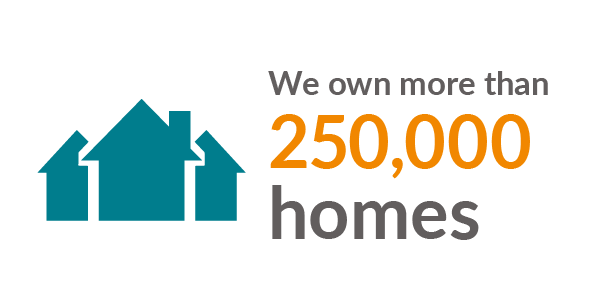
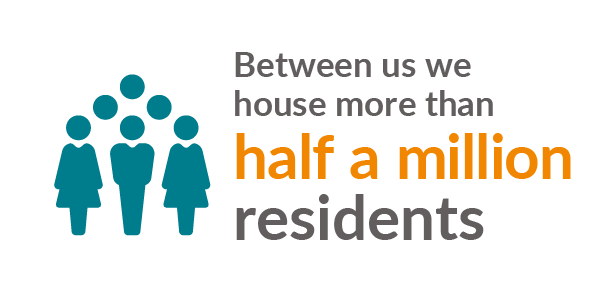
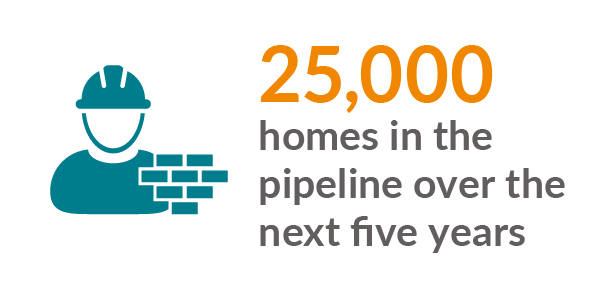
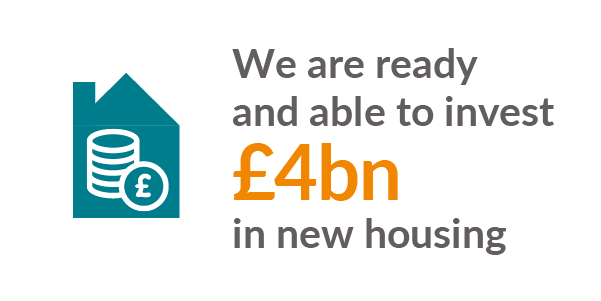
Homes for the South West in Numbers
Recent News & Developments
Homes for the South West members are providing the ambitious building plans to effectively support South West delivery of the government’s 300,000 p.a. building targets. See below for examples of our recent developments, building much-needed new homes across the south west. Contact us if you would like to know more about our work.
Social landlord Coastline Housing has appointed two new Directors to its Executive Team as the charity moves into the second year of its ambitious plan to help end the housing crisis in Cornwall.
Natasha Eden and Zoe Field
Zoe Field has been appointed to the Director of Finance role following 16 years working with Coastline. She began her finance career as a Youth Training Scheme apprentice in 2000 after leaving school and progressed through a wide range of finance roles since then. Zoe will be responsible for setting and delivering Coastline’s finance and treasury strategy, as well as managing and reporting on financial performance.
Meanwhile, Coastline’s former Director of Finance, People and Change Nathan Mallows takes up a new position as Director of Development, Growth and Partnerships within the company. Nathan will be moving Coastline’s development programme forwards, delivering new affordable housing solutions and partnerships, following the recent retirement of Coastline’s former Director of Development, Chris Weston.
Louise Beard, who joined Coastline in 2007 and has over 30 years’ experience in social housing, care and support sector, continues her role as Deputy CEO within the Executive Team. Louise has a genuine belief in affordable housing improving the quality of life, health and wellbeing of individuals and a strong commitment to customer service and safe, secure high-quality homes.
Allister Young, Chief Executive, said: “We’re delighted to be welcoming both Natasha and Zoe to Executive team here at Coastline and look forward to the new perspective and energy they will both bring. We’re also looking forward to watching Nathan apply his finance mind to taking on a new challenge with our development programme moving forwards. The new team, including Louise, puts Coastline in a strong position to deliver its aims, which is important because the housing crisis is not something that is going away any time soon. Thousands of people are still in need of a safe, warm, comfortable and affordable place to call home and this is what Coastline exists to provide.
“Over the next year, we will be aiming to complete 240 more new affordable homes and start on site with nearly 500 more. Our plans are ambitious because they need to be. And to turn our plans into action we need great people to help drive them forward. As an Executive Team, we’re feeling excited about what Coastline hopes to achieve in the next few years for the people of Cornwall and we look forward to making a genuine difference to local lives.”
Coastline currently owns over 5,500 homes in Cornwall and operates an Extra Care scheme and Homeless Service, helping a wide variety of people in housing need locally.
Construction has now started on a £33.5m, eco-friendly community of affordable homes for social rent being delivered for Plymouth Community Homes in Millbay in the heart of Plymouth’s city centre.